What Is A "Dead Cat Bounce?"
A dead cat bounce is a sharp but short-lived recovery in a security's price after a significant decline. It is often seen as a temporary reprieve before the price continues to fall.
Dead cat bounces can be caused by a number of factors, such as:
- Short covering: Short sellers are investors who sell securities that they do not own, hoping to buy them back later at a lower price. If the price of a security begins to rise, short sellers may be forced to buy back the securities in order to avoid losses. This can cause the price of the security to rise even further.
- Profit-taking: Profit-taking is when investors sell a security after it has risen in price in order to lock in their profits. If a security has fallen significantly, some investors may be tempted to buy it back after a small rebound in the price, believing that the worst is over. This can also cause the price of the security to rise further.
- Psychological factors: Investors may also be influenced by psychological factors, such as hope or fear, when trading during a dead cat bounce. For example, some investors may buy a security after a rebound in the price in the hope that it will continue to rise. Others may sell a security after a small rebound in the price, fearing that it will continue to fall.
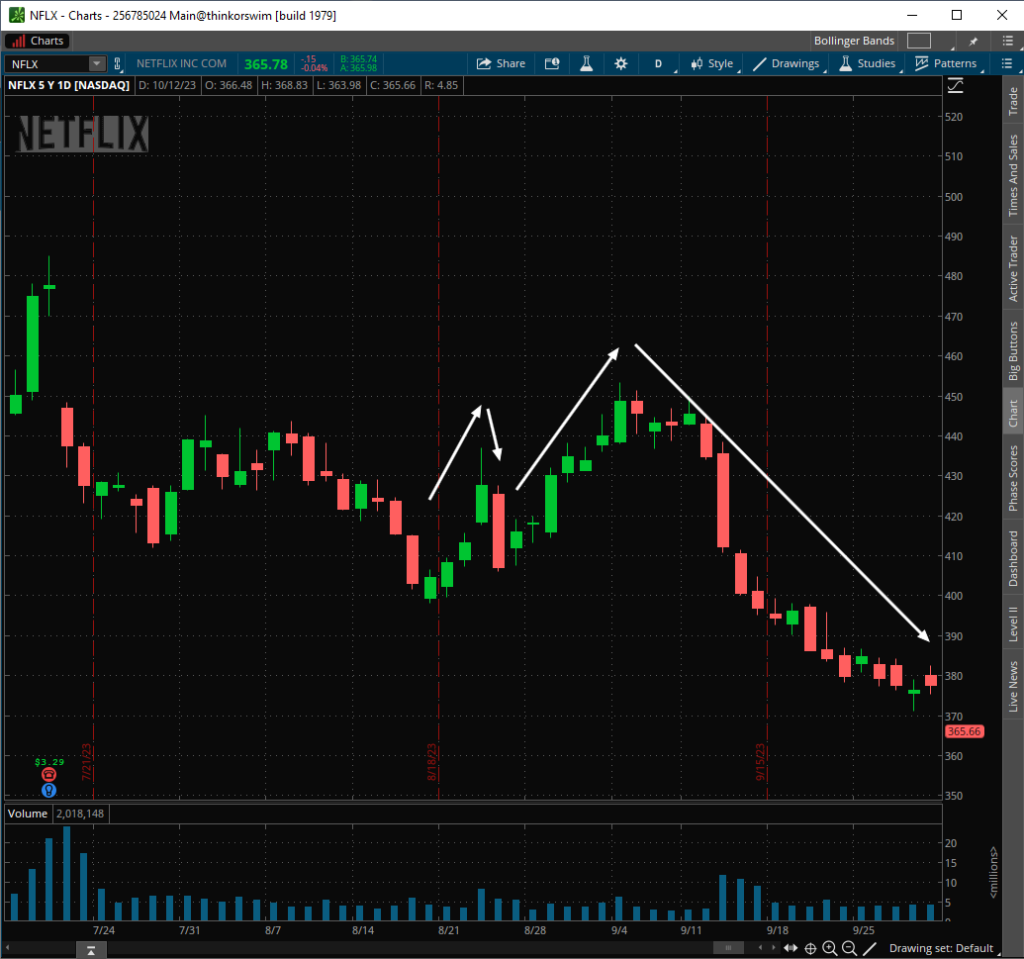
Netflix's stock price fell by over 70% in the first half of 2023. However, in July 2023, the stock price rebounded by over 20% in a matter of weeks. This rebound was likely due to a number of factors, including short covering, profit-taking, and psychological factors. However, the rebound was short-lived, and the stock price began to fall again in August 2023.
Please note that this is just one example of a dead cat bounce. There are many other examples that could be cited. It is important to remember that dead cat bounces can be difficult to trade, and there is always the risk of losing money. Traders should carefully manage their risk and trade within their risk tolerance.
Consider the following terms:
Short interest
Short interest is the total number of shares of a security that have been sold short but not yet covered. Short selling is a trading strategy where an investor borrows a security and sells it, hoping to buy it back later at a lower price and pocket the difference. Short interest can be a good indicator of market sentiment, as a high short interest suggests that many investors believe that the stock is going to decline in price.
Covering
Covering is the act of buying back a security that has been sold short. Short sellers typically cover their positions when they believe that the stock price is going to rise or when they are forced to cover by a margin call.
Options market
The options market is a market where investors can buy and sell contracts that give them the right, but not the obligation, to buy or sell a security at a specified price on or before a specified date. Options can be used to hedge against losses or to speculate on the future direction of a stock price.
How short interest, covering, and the options market can affect apparent trends and influence dead cat bounces
Short interest, covering, and the options market can all affect apparent trends and influence dead cat bounces in the following ways:
- Short interest: A high short interest can create a situation where a small amount of buying can lead to a sharp increase in the stock price. This is because short sellers are often forced to cover their positions when the stock price rises, which can lead to a buying frenzy. This can create a dead cat bounce, as the stock price rises temporarily before continuing to fall.
- Covering: Covering can also lead to dead cat bounces. When short sellers cover their positions, they need to buy shares of the stock. This can cause the stock price to rise temporarily, even if the underlying fundamentals of the company are weak.
- Options market: The options market can also influence dead cat bounces. For example, if there is a large open interest in call options on a stock, market makers may be forced to buy shares of the stock to hedge their positions. This can cause the stock price to rise temporarily, even if the underlying fundamentals of the company are weak.
It is important to note that dead cat bounces can be difficult to predict and trade. Investors should carefully manage their risk when trading during a dead cat bounce.
Here is an example of how short interest, covering, and the options market can influence a dead cat bounce:
A stock has been falling in price for several weeks and has a high short interest. One day, the stock price starts to rise. This may be due to a number of factors, such as positive news about the company or a general improvement in market sentiment.
As the stock price rises, short sellers are forced to cover their positions. This buying pressure can cause the stock price to rise even further. Additionally, if there is a large open interest in call options on the stock, market makers may be forced to buy shares of the stock to hedge their positions.
This buying pressure can create a dead cat bounce, as the stock price rises temporarily before continuing to fall.
Investors should be aware of the potential for dead cat bounces and should carefully manage their risk when trading during a dead cat bounce.
How to trade a dead cat bounce
There are a number of ways to trade a dead cat bounce. Here are a few examples:
- Shorting the security: Short sellers can profit from a dead cat bounce by selling a security short and then buying it back later at a lower price.
- Buying a put option: A put option gives the holder the right, but not the obligation, to sell a security at a specified price on or before a specified date. If the price of a security falls after a dead cat bounce, the value of the put option will increase.
- Using a stop-loss order: A stop-loss order is an order to sell a security if the price falls below a specified level. This can help to protect traders from losses if the price of a security continues to fall after a dead cat bounce.
Pitfalls of trading dead cat bounces
Dead cat bounces can be difficult to trade, and there are a number of pitfalls that traders should be aware of. Here are a few examples:
- False signals: Dead cat bounces can generate false signals, which can lead to losses for traders. It is important to use other technical indicators and market analysis to confirm that a dead cat bounce is actually happening before trading it.
- Volatility: Dead cat bounces can be accompanied by high volatility, which can make it difficult to enter and exit trades at the right time.
- Risk: Trading dead cat bounces can be risky, and there is always the potential to lose money. Traders should carefully manage their risk and trade within their risk tolerance.
Conclusion
Dead cat bounces can be a profitable trading opportunity, but it is important to be aware of the risks involved. Traders should use other technical indicators and market analysis to confirm that a dead cat bounce is actually happening before trading it, and they should carefully manage their risk.
Disclaimer: This material is provided for educational and entertainment purposes only. It does not constitute trading or investment advice.